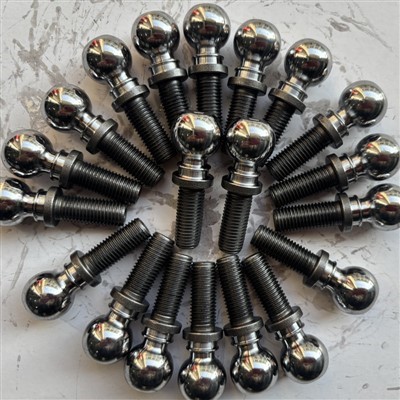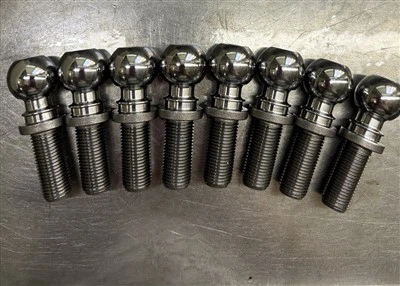
Ever wondered why your car stays level when cornering? The secret lies in your suspension system, specifically the Anti Roll Bar Ball Joint. Often referred to as the "flexible joint" of the chassis, this small but critical component connects your vehicle's stabilizer bar to the lower control arm. Its primary job is to transmit steering forces while absorbing the shocks from uneven road surfaces, keeping the vehicle balanced during sharp turns. From a manufacturing perspective, the industry is shifting toward much higher standards for durability and safety. Leading producers now utilize high-strength alloy steel with tensile strengths exceeding 780 MPa to ensure these joints can withstand extreme mechanical pressure. By combining precision casting with CNC finishing, manufacturers can achieve a ball size tolerance within ±0.02 mm, which is vital for smooth articulation and preventing premature play in the socket. If you are following the latest material news, the push for electrophoretic anti-corrosion coatings is currently the gold standard for premium parts, helping to prevent rust in harsh climates where road salt is common.
Recognizing when it is time for a replacement is just as important as knowing how the part works within the assembly. When an Anti Roll Bar Ball Joint begins to wear out, the first sign is usually a dull knocking or rattling sound coming from the front suspension when driving over speed bumps or potholes. You might also notice increased body roll during turns, making the car feel less responsive than usual. Unlike cheaper, stamped-steel alternatives, high-quality links are built with reinforced rubber boots that keep internal grease in and external dirt out. To replace one, you typically need to lift the vehicle, remove the wheel, and unscrew the mounting nuts on both ends of the link rod. It is a straightforward process, but using a torque wrench is essential to meet original manufacturer specifications. Since these components are often side-specific-such as the nearside front-it is crucial to verify your vehicle's layout before ordering a replacement. Choosing a precision-engineered part not only restores your ride quality but also protects more expensive suspension components from the vibration caused by a failing joint.