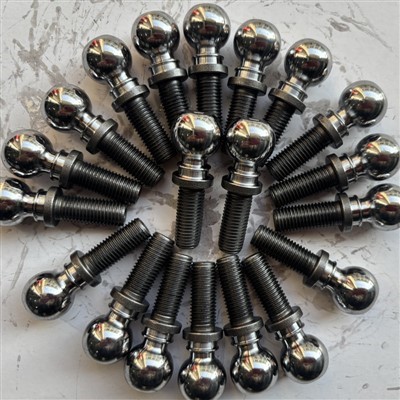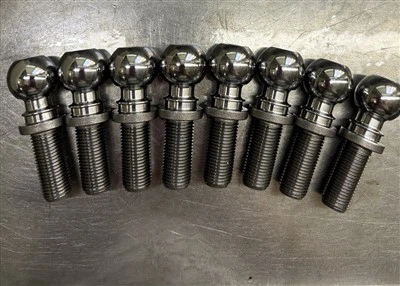
Vehicle suspension systems rely on a network of moving parts to keep tires glued to the road, and the Front Anti Roll Bar Ball Joint acts as a vital pivot point in this assembly. Often referred to by mechanics as a stabilizer link end, this component connects the anti-roll bar to the control arms or struts, allowing the suspension to flex while minimizing body roll during sharp turns. Most high-grade versions are manufactured using cold-forged steel for the housing and induction-hardened ball studs to resist the immense mechanical stress of daily driving. Within the automotive aftermarket industry, professionals emphasize that a worn Front Anti Roll Bar Ball Joint is a common cause of mysterious clunking noises or a loose feeling in the steering wheel. Unlike standard suspension joints that primarily bear vertical weight, these specific joints manage lateral forces, making their structural integrity paramount for high-speed cornering and emergency maneuvers. By opting for a design that includes a high-quality chloroprene rubber dust boot, drivers can protect the internal grease from road salt and grit, ensuring the metal-on-metal interface remains lubricated for tens of thousands of miles.
Replacing these components is a standard part of vehicle maintenance, but the procedure requires a precise sequence to avoid damaging the new threads. First, the vehicle must be lifted and the weight of the suspension neutralized to take the tension off the stabilizer bar. Once the old unit is removed, the new Front Anti Roll Bar Ball Joint should be hand-tightened before a torque wrench is used to meet the manufacturer's specific foot-pound requirements. Recent news from the global steel market suggests that shifts in the pricing of high-carbon alloys are pushing manufacturers to refine their heat-treatment processes to maintain durability without excessive cost increases. When comparing different brands, it is worth noting that some premium options feature a grease nipple for periodic servicing, while many factory replacements are sealed for life. Maintaining a healthy Front Anti Roll Bar Ball Joint prevents uneven tire wear and keeps the vehicle's center of gravity stable during sudden transitions. Regularly checking the rubber boots for cracks or leaks during every oil change is a simple yet effective way to catch potential failures before they compromise your safety on the highway. A well-maintained Front Anti Roll Bar Ball Joint ensures that the chassis stays quiet and the handling stays sharp under all road conditions.