
Hey there! As a supplier of steel ball joints, I often get asked if there are any standards for these nifty little components. Well, let me tell you, there sure are! In this blog post, I'm gonna break down the standards for steel ball joints and why they matter.
What Are Steel Ball Joints?
Before we dive into the standards, let's quickly go over what steel ball joints are. Steel ball joints are mechanical components that allow for rotational movement between two parts. They consist of a ball and socket design, where the ball fits into the socket and can move in multiple directions. These joints are commonly used in automotive, industrial, and aerospace applications, among others.


Why Standards Matter
Standards play a crucial role in ensuring the quality, safety, and performance of steel ball joints. They provide a set of guidelines and requirements that manufacturers must follow to produce ball joints that meet specific criteria. By adhering to these standards, manufacturers can ensure that their products are reliable, durable, and compatible with other components in a system.
Industry Standards for Steel Ball Joints
There are several industry standards that govern the design, manufacturing, and testing of steel ball joints. Some of the most common standards include:
ISO Standards
The International Organization for Standardization (ISO) has developed a series of standards for ball joints, including ISO 12240-1 and ISO 12240-2. These standards specify the dimensions, tolerances, and performance requirements for ball joints used in automotive applications. They also provide guidelines for testing and inspection to ensure that the ball joints meet the required standards.
SAE Standards
The Society of Automotive Engineers (SAE) has also developed standards for ball joints, such as SAE J1939 and SAE J2044. These standards are specifically designed for ball joints used in heavy-duty vehicles, such as trucks and buses. They cover aspects such as load capacity, fatigue life, and corrosion resistance.
ASTM Standards
The American Society for Testing and Materials (ASTM) has developed a range of standards for ball joints, including ASTM F1581 and ASTM F1582. These standards focus on the mechanical properties and performance of ball joints, such as strength, hardness, and wear resistance. They also provide guidelines for testing and evaluation to ensure that the ball joints meet the required standards.
Our Commitment to Quality
As a supplier of steel ball joints, we are committed to providing our customers with high-quality products that meet or exceed industry standards. We use state-of-the-art manufacturing processes and equipment to ensure that our ball joints are precision-engineered and built to last. We also conduct rigorous testing and inspection procedures to ensure that our products meet the highest quality standards.
Different Types of Steel Ball Joints
There are several different types of steel ball joints available on the market, each with its own unique features and applications. Some of the most common types include:
Racing Ball Joints
Racing ball joints are designed for high-performance applications, such as racing cars and off-road vehicles. They are typically made from high-strength steel and feature a precision-machined ball and socket design. Racing ball joints offer increased durability, strength, and performance compared to standard ball joints. Check out Racing Ball Joints for more information.
Adjustable Ball Joints
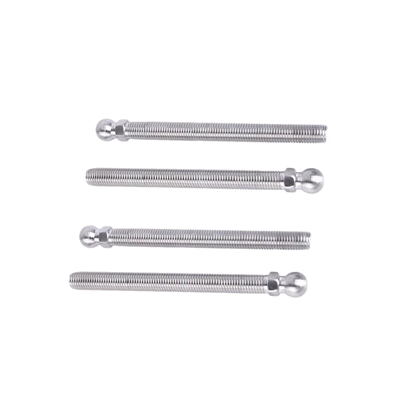
Adjustable ball joints allow for fine-tuning of the suspension geometry, which can improve handling and performance. They are commonly used in racing and performance applications, as well as in custom-built vehicles. Adjustable ball joints typically feature a threaded body that allows for easy adjustment of the joint's position. You can find more details about Adjustable Ball Joint.
Heavy Duty Ball Joints
Heavy duty ball joints are designed for use in heavy-duty vehicles, such as trucks, buses, and construction equipment. They are typically made from high-strength steel and feature a larger ball and socket design to handle the increased loads and stresses. Heavy duty ball joints offer increased durability and reliability compared to standard ball joints. For more on Heavy Duty Ball Joints.
How to Choose the Right Steel Ball Joint
When choosing a steel ball joint, it's important to consider several factors, including the application, load requirements, and budget. Here are some tips to help you choose the right ball joint for your needs:
- Application: Consider the specific application for which the ball joint will be used. Different applications may require different types of ball joints, such as racing ball joints for high-performance applications or heavy duty ball joints for heavy-duty vehicles.
- Load Requirements: Determine the load requirements of the application, including the maximum load that the ball joint will need to support. This will help you choose a ball joint with the appropriate load capacity.
- Budget: Consider your budget when choosing a ball joint. While high-quality ball joints may be more expensive, they can offer better performance and durability in the long run.
Conclusion
In conclusion, there are indeed standards for steel ball joints, and they play a crucial role in ensuring the quality, safety, and performance of these components. As a supplier of steel ball joints, we are committed to providing our customers with high-quality products that meet or exceed industry standards. Whether you're looking for racing ball joints, adjustable ball joints, or heavy duty ball joints, we have the right solution for your needs.
If you're interested in learning more about our steel ball joints or have any questions, please don't hesitate to reach out. We'd be happy to discuss your requirements and help you find the perfect ball joint for your application. Let's start a conversation about your procurement needs and see how we can work together!
References
- ISO 12240-1:2017, Road vehicles - Ball joints - Part 1: Vocabulary and general requirements
- ISO 12240-2:2017, Road vehicles - Ball joints - Part 2: Performance requirements and test methods
- SAE J1939:2016, Serial Control and Communications Heavy Vehicle Network
- SAE J2044:2016, Heavy Duty Vehicle Suspension Joints - Performance Requirements and Test Methods
- ASTM F1581-16, Standard Specification for Wrought Titanium-6Aluminum-4Vanadium Alloy for Surgical Implant Applications (UNS R56400)
- ASTM F1582-16, Standard Specification for Wrought Titanium-6Aluminum-7Niobium Alloy for Surgical Implant Applications (UNS R56700)