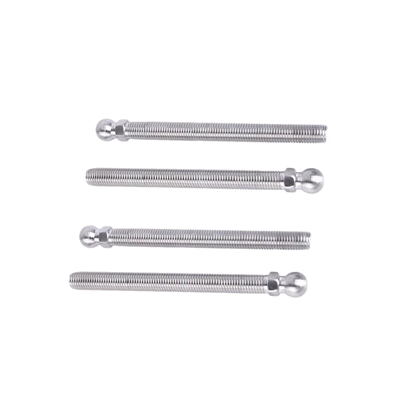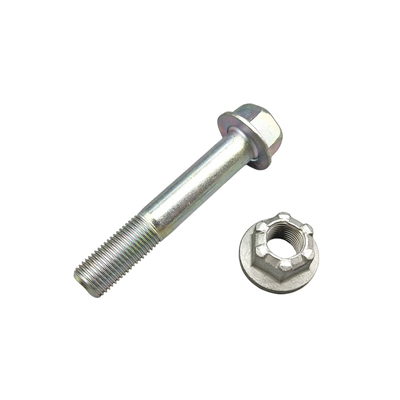

A sway bar ball joint is a crucial component in a vehicle's suspension system, connecting the sway bar to the control arm or other suspension parts. This joint allows for smooth movement and flexibility while the vehicle is in motion, helping to reduce body roll during cornering. However, like many moving parts in a vehicle, it requires proper maintenance, including regular lubrication. In this blog, we'll explore what happens if a sway bar ball joint is not lubricated, and as a sway bar ball joint supplier, we'll also touch on how to prevent these issues.
Increased Friction and Wear
One of the most immediate consequences of not lubricating a sway bar ball joint is increased friction. Lubrication acts as a barrier between the moving parts of the joint, reducing the direct contact and the resulting friction. Without this lubrication, the metal surfaces of the ball and socket within the joint rub against each other. Over time, this friction can cause significant wear to the joint components.
The wear on the ball and socket can lead to a decrease in the joint's smoothness of movement. As the surfaces become rougher due to friction, the joint may start to bind or move in a jerky manner. This not only affects the performance of the sway bar but also puts additional stress on other parts of the suspension system. For example, the increased stress can cause premature wear on the control arms or bushings connected to the sway bar.
Noise and Vibration
A lack of lubrication in the sway bar ball joint can also result in noise and vibration. As the joint wears and the friction increases, it can produce a variety of sounds. You may hear a clunking, rattling, or squeaking noise when going over bumps or making turns. These noises are a clear indication that something is wrong with the joint.
The vibration caused by the poorly lubricated joint can also be felt through the steering wheel or the vehicle's body. This can be a nuisance for the driver and passengers, and it may also be a sign of a more serious problem. If left unaddressed, the noise and vibration can worsen over time, making the driving experience uncomfortable and potentially dangerous.
Reduced Handling and Stability
The primary function of the sway bar is to improve the vehicle's handling and stability, especially during cornering. When the sway bar ball joint is not lubricated and starts to wear, its ability to perform this function is compromised. The joint may not move as freely as it should, which can lead to uneven weight distribution across the wheels.
As a result, the vehicle may experience increased body roll during turns. This can make the vehicle feel less stable and more difficult to control, especially at higher speeds. In extreme cases, the reduced handling and stability can increase the risk of accidents, as the driver may have less control over the vehicle's movements.
Premature Failure of the Joint
If the sway bar ball joint is not lubricated for an extended period, it will eventually fail. The excessive wear and friction can cause the ball to separate from the socket or the joint to become completely seized. When this happens, the sway bar is no longer able to function properly, and the vehicle's suspension system will be severely affected.
A failed sway bar ball joint can lead to a loss of control over the vehicle, as the sway bar is no longer able to provide the necessary stability. In addition, a failed joint can cause damage to other parts of the suspension system, such as the control arms or the sway bar itself. Replacing a failed sway bar ball joint can be costly, both in terms of parts and labor.
How to Prevent These Issues
As a sway bar ball joint supplier, we understand the importance of proper maintenance. To prevent the problems associated with a lack of lubrication, it is recommended to follow the vehicle manufacturer's maintenance schedule. This typically includes regular inspections and lubrication of the sway bar ball joints.
When lubricating the sway bar ball joint, it is important to use the correct type of lubricant. The lubricant should be able to withstand the high pressures and temperatures generated by the joint during operation. It is also important to apply the lubricant evenly to ensure proper coverage.
In addition to regular lubrication, it is also important to inspect the sway bar ball joints for signs of wear or damage. If you notice any noise, vibration, or other signs of a problem, it is important to have the joints inspected and repaired as soon as possible.
Our Products and Services
As a leading sway bar ball joint supplier, we offer a wide range of high-quality sway bar ball joints. Our products are designed to meet the strictest industry standards and are built to last. We offer Offside Front Anti Roll Bar Ball Joint, Roll Bar Joint, and Nearside Front Anti Roll Bar Ball Joint, among others.
We also provide comprehensive technical support and advice to our customers. Our team of experts is available to answer any questions you may have about our products or the maintenance of your sway bar ball joints. Whether you are a professional mechanic or a DIY enthusiast, we are here to help you keep your vehicle running smoothly.
Contact Us for Procurement
If you are in the market for high-quality sway bar ball joints, we invite you to contact us for procurement. Our team is ready to assist you with your order and provide you with the best possible service. We offer competitive prices, fast shipping, and a satisfaction guarantee. Don't let a poorly lubricated sway bar ball joint cause problems for your vehicle. Contact us today to learn more about our products and how we can help you.


References
- Automotive Suspension Systems: Design, Analysis, and Testing, by John C. Dixon
- The Automotive Chassis: Engineering Principles, by Gillespie, T. D.
- Vehicle Dynamics and Control, by Rajesh Rajamani