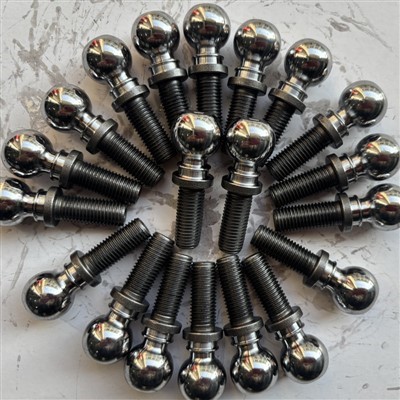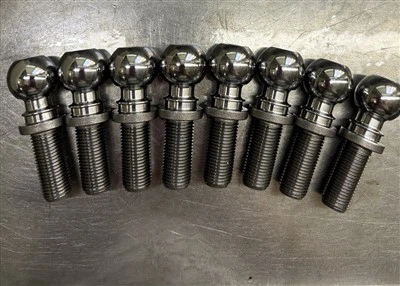
A ball joint is a critical connecting component within a vehicle's suspension and steering systems. Its technical name is "spherical joint," though it is commonly referred to simply as a "ball joint." Acting as the "joint" of the chassis system, it is primarily responsible for linking various components and facilitating multi-directional force transmission and motion adjustment; as such, it is vital to a vehicle's handling stability and driving safety.
Generally speaking, a "ball joint" refers to a mechanical component used to create a flexible connection between two or more parts. It consists of a spherical ball-typically made of metal or plastic-and a corresponding socket; this assembly allows for both rotational and axial movement. This design enables the ball joint to move flexibly in various directions, thereby meeting the diverse operational requirements of mechanical equipment.
In the automotive industry, the ball joint is a highly significant component, typically employed within the suspension system or steering mechanism. For instance, the ball joint on a vehicle's tie rod serves as a crucial link connecting the steering mechanism to the wheels; it directly impacts the vehicle's handling stability, operational safety, and tire longevity. Furthermore, automotive ball joints are categorized into outer ball joints (tie rod ends) and inner ball joints (rack ends); while physically distinct, these components work in tandem to facilitate the vehicle's steering and suspension functions.