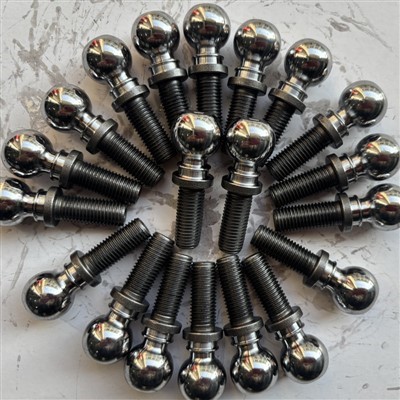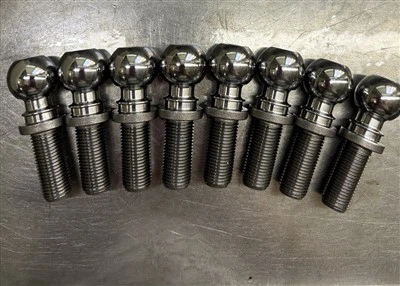
The steering tie rod ball joint is a critical connecting component within an automobile's steering system. Its primary function is to transmit steering forces while simultaneously allowing for free, multi-directional movement, thereby accommodating the complex changes in wheel orientation that occur during steering and driving.
The steering tie rod ball joint facilitates multi-degree-of-freedom movement through a spherical articulation structure. The specific operational process is as follows:
When the driver turns the steering wheel, the steering gear generates torque, which is transmitted through the steering tie rod to the ball joint;
The ball joint rotates or tilts freely within its socket, allowing the tie rod to flexibly adjust its angle in response to the vertical movement (bounce) or steering action of the wheel;
The friction between the ball joint and the socket must be maintained at an optimal level: excessive friction results in heavy steering, while insufficient friction leads to steering looseness (play) and unstable handling;
A dust boot seals the internal components, preventing the ingress of dust and moisture to extend the service life of the assembly;
The interior typically incorporates a compression spring or an elastic mechanism to automatically compensate for any clearance resulting from wear, and to absorb impact loads transmitted from the road surface.