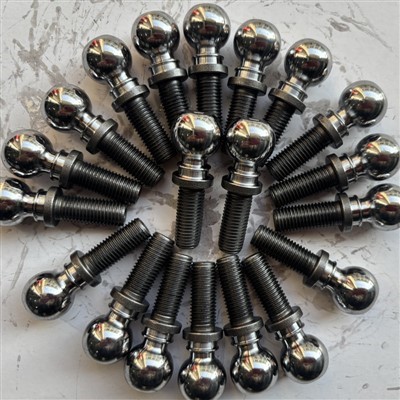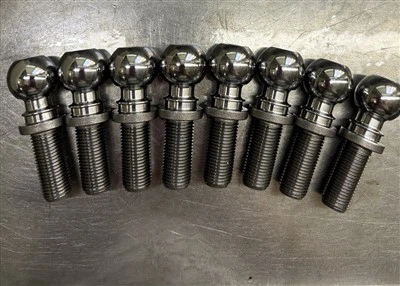
The tie rod ball joint serves as a critical articulating component within an automobile's steering system; its internal structural design must simultaneously accommodate multi-directional rotational flexibility, impact resistance, wear resistance, and effective dust-proof sealing.
Ball Stud: Typically manufactured from high-carbon steel or alloy steel, it features a spherical end that seats within the ball socket and is responsible for transmitting steering forces. The surfaces of certain high-end products undergo Micro-Arc Oxidation (MAO) treatment to enhance corrosion resistance.
Ball Socket: A housing featuring a spherical recess, commonly fabricated from self-lubricating, wear-resistant materials-such as Polyoxymethylene (POM) or Polytetrafluoroethylene (PTFE)-to minimize friction and extend service life.
Spring Compensation Mechanism: Comprising a compression spring, this mechanism automatically compensates for clearance that develops between the ball stud and socket due to wear, while also absorbing impact loads transmitted from the road surface. The spring's preload can be adjusted via a threaded plug.
Dust Seal System: Employs a dual-layer rubber dust boot (sometimes incorporating a rubber bushing) to prevent the ingress of dust and moisture; some products are internally packed with silicone grease or lubricant to ensure continuous lubrication.