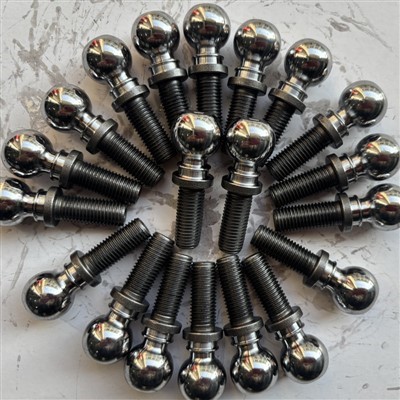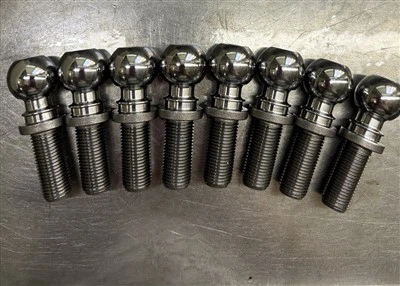
Transmitting Steering Torque: Precisely conveys steering commands from the steering wheel to the wheels-via the steering gear and tie rods-to execute steering maneuvers. The ball joints feature a spherical hinge structure that enables efficient force transmission even under multi-angle deflection, ensuring steering response accuracy within ±0.5°.
Enabling Multi-directional Degrees of Freedom: Allows the steered wheels to undergo vertical and horizontal displacement, accommodating uneven road surfaces and geometric changes during steering to maintain optimal contact between the wheels and the ground.
Cushioning Road Impact: By utilizing an internal elastic structure and dynamic clearance (typically 0.1–0.3 mm), it absorbs a portion of the bumps and shocks from the road surface, thereby reducing vibrations transmitted to the steering wheel and enhancing overall ride comfort.
Auxiliary Suspension System Operation: Working in conjunction with the stabilizer bar, it assists the bar in generating anti-roll resistance-specifically when the left and right wheels are at different heights (such as when traversing potholes or during cornering-induced body roll)-thereby suppressing body roll and enhancing handling stability.
Maintaining Wheel Alignment Parameters: The condition of the ball joints directly affects alignment parameters such as toe and caster. If worn or loose, this can lead to abnormal tire wear, vehicle drifting, or steering wheel vibration.