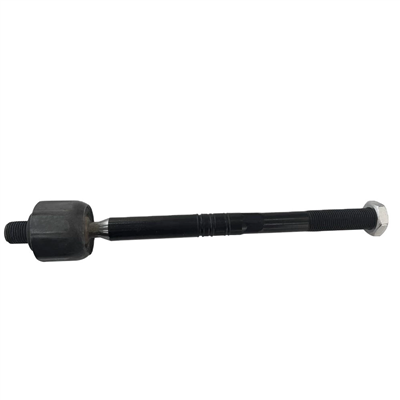

Hey there! As a supplier of stainless steel ball joints, I've been getting a lot of questions lately about the flexibility of these nifty little components. So, I thought I'd take a few minutes to break it down for you.
First off, let's talk about what a stainless steel ball joint actually is. In simple terms, it's a mechanical connection that allows for movement in multiple directions. It consists of a ball and socket design, where the ball is housed within the socket. This design enables the joint to pivot and rotate, providing a high degree of flexibility.
Now, when we're talking about the flexibility of a stainless steel ball joint, there are a few key factors to consider. One of the most important is the range of motion. This refers to the extent to which the joint can move in different directions. A good quality stainless steel ball joint will typically have a wide range of motion, allowing for smooth and unrestricted movement.
Another factor that affects flexibility is the material used. Stainless steel is a popular choice for ball joints because it's strong, durable, and resistant to corrosion. This means that the joint can withstand a lot of wear and tear, while still maintaining its flexibility.
The design of the ball joint also plays a role in its flexibility. Some ball joints are designed to be more flexible than others, depending on their intended use. For example, a ball joint used in a high-performance automotive application may need to have a greater range of motion than one used in a more standard application.
So, why is flexibility so important in a stainless steel ball joint? Well, it allows for better performance and functionality. In automotive applications, for example, a flexible ball joint can help to improve handling and stability. It can also reduce wear and tear on other components, such as the suspension system.
In industrial applications, flexibility is equally important. A flexible ball joint can allow for greater movement and adjustment, making it easier to install and maintain equipment. It can also help to reduce stress and strain on the joint, which can extend its lifespan.
Now, let's take a look at some of the specific types of stainless steel ball joints that we offer. One of our most popular products is the Offside Rear Anti Roll Bar Linkage Ball Joint. This ball joint is designed for use in automotive applications, specifically in the rear anti-roll bar linkage. It offers a high degree of flexibility, allowing for smooth and precise movement.
Another popular product is the Nearside Rear Anti Roll Bar Linkage Ball Joint. This ball joint is similar to the offside version, but it's designed for the nearside of the vehicle. It also offers excellent flexibility and performance.


Finally, we have the Rear Anti Roll Bar Linkage Ball Joint. This ball joint is a more general-purpose option, suitable for a variety of automotive applications. It provides a good balance of flexibility and durability, making it a popular choice among our customers.
In conclusion, the flexibility of a stainless steel ball joint is an important factor to consider when choosing a product. It can have a significant impact on the performance and functionality of the joint, as well as the overall performance of the equipment or vehicle in which it's used.
If you're in the market for a high-quality stainless steel ball joint, we'd love to hear from you. We offer a wide range of products to suit your needs, and our team of experts is always on hand to provide you with the advice and support you need. So, don't hesitate to get in touch and start a conversation about your requirements. We look forward to working with you!
References:
- Engineering textbooks on mechanical design and materials science
- Industry standards and guidelines for ball joints
- Manufacturer's specifications and technical data sheets