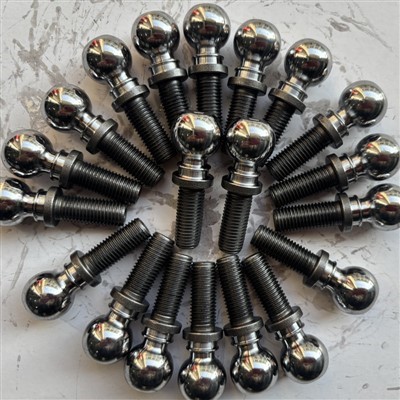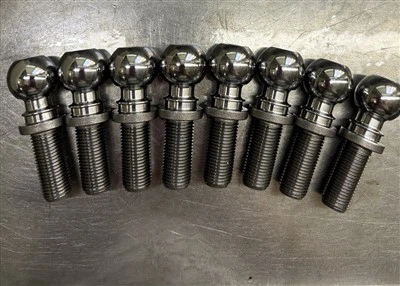
During steering maneuvers, the output force from the steering gear is transmitted to the steering knuckle via the ball stud. The ball-and-socket structure allows the tie rod to pivot in three dimensions, thereby accommodating vertical wheel travel and changes in steering angle.
The interior is packed with high-temperature grease (such as lithium-based grease) to minimize friction and ensure both flexibility and durability (typically operating within a temperature range of -40°C to 120°C).
The inner ball joint is a critical component within an automobile's steering system, classified as a type of ball-and-socket universal joint. Its fundamental principle lies in utilizing a spherical articulation structure to facilitate multi-degree-of-freedom motion transmission, thereby ensuring that steering commands are conveyed from the steering gear to the wheels with precision and stability.