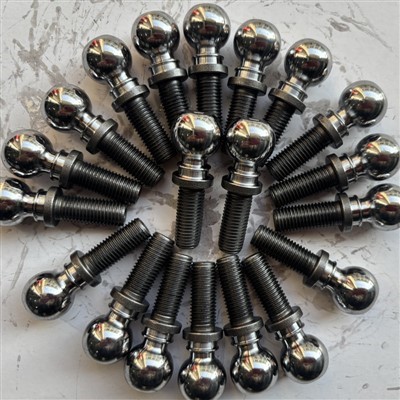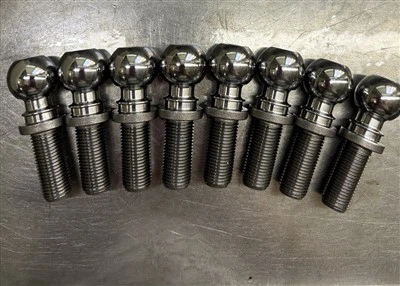
The steering rack tie rod end is a critical component within a vehicle's steering system, forming an integral part of the steering gear assembly. Its primary function is to translate the driver's steering wheel inputs into actual steering movements of the wheels. Through a mechanical linkage, it works in conjunction with the steering tie rod to transmit steering forces and facilitate directional adjustments, thereby directly influencing the vehicle's handling stability and driving safety. To ensure the precision and durability of the steering system, the tie rod end must strictly adhere to original equipment manufacturer (OEM) specifications.
Typically, a steering rack tie rod end consists of a metal housing, a ball stud, a dust boot, and an internal lubrication mechanism. Its core component is the ball stud: one end connects to the steering gear, while the other connects to the steering tie rod via a ball-and-socket joint structure. When the driver turns the steering wheel, the steering gear drives the ball stud to pivot at various angles within the socket; this action converts rotational motion into linear motion, thereby actuating the wheels to turn. The dust boot serves to seal out dust and moisture, while the internal lubrication mechanism utilizes grease to minimize friction and extend the service life of the component.