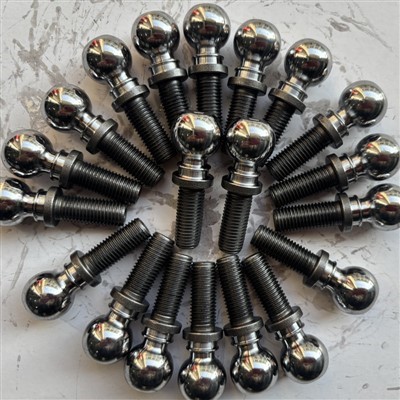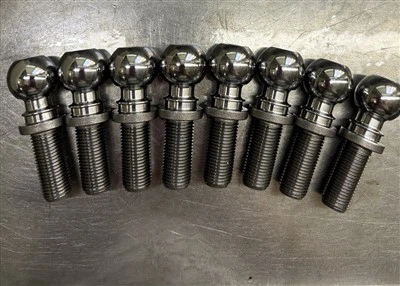
Material Differences
Domestic inner and outer ball joints typically utilize standard carbon steel, whereas imported versions employ higher-grade stainless steel or specialized alloys. This choice of materials gives imported ball joints a distinct advantage in terms of both structural strength and corrosion resistance.
Manufacturing Process Differences
The manufacturing processes for domestic ball joints are relatively simple, generally relying on cold forging and welding techniques. In contrast, imported ball joints utilize advanced precision casting and high-precision machining technologies, thereby ensuring superior product stability and reliability.
Precision Differences
During the manufacturing process, imported ball joints place a strong emphasis on controlling machining precision, resulting in high accuracy and minimal dimensional error. Domestic ball joints, however, often lack the requisite expertise and equipment for such fine machining, rendering them relatively weaker in terms of manufacturing precision.
Design Differences
The design of imported ball joints is more refined, featuring a more aesthetically pleasing appearance and more attractive color finishes. Domestic ball joints, conversely, tend to feature a more utilitarian design, with a less visually appealing aesthetic and more ordinary color schemes.