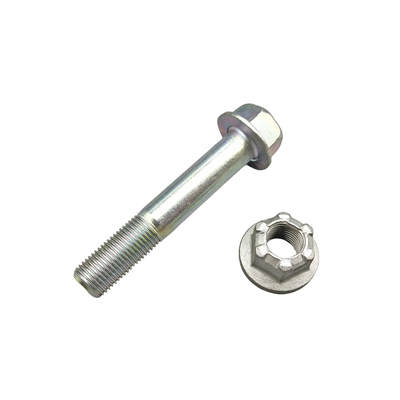

Hey there, automotive enthusiasts! As a supplier of lower ball joints, I often get asked about the proper torque for lower ball joint bolts. It's a crucial topic because getting the torque right can significantly impact the performance and safety of your vehicle. So, let's dive into it.


First off, what exactly is a lower ball joint? Well, it's a key component in your vehicle's suspension system. It connects the control arm to the steering knuckle, allowing for smooth movement and articulation as you drive. The lower ball joint takes a lot of stress and wear, so it's important to ensure it's installed correctly, and that includes torquing the bolts to the proper specification.
Now, why is the proper torque so important? If the bolts are under - torqued, they can come loose over time. This can lead to a noisy suspension, uneven tire wear, and in the worst - case scenario, a ball joint failure while you're driving, which is extremely dangerous. On the other hand, over - torquing the bolts can damage the threads, the ball joint itself, or even the control arm or steering knuckle. This can also lead to premature failure of the components.
So, how do you determine the proper torque for lower ball joint bolts? The answer isn't one - size - fits - all. It depends on several factors, including the make and model of your vehicle, the type of lower ball joint you're using, and the material of the bolts.
Most vehicle manufacturers provide a specific torque specification in the service manual. You can usually find this information online or at your local auto parts store. For example, if you're working on a Ford F - 150, you'll want to look up the exact torque value for the lower ball joint bolts in the Ford service manual.
Another way to find the proper torque is to consult the manufacturer of the lower ball joint. As a lower ball joint supplier, we have detailed information about the torque requirements for our products. We test our ball joints rigorously to ensure they meet or exceed industry standards, and we can provide you with the correct torque values.
Let's talk about some general guidelines. For most passenger cars, the torque for lower ball joint bolts typically ranges from 80 to 120 foot - pounds. However, for larger vehicles like trucks and SUVs, the torque can be higher, often between 120 and 180 foot - pounds. These are just rough estimates, though, and you should always refer to the specific guidelines for your vehicle.
When it comes to torquing the bolts, you need the right tools. A torque wrench is an essential tool for this job. It allows you to apply the exact amount of torque specified. Make sure the torque wrench is calibrated regularly to ensure accurate readings.
Here's a step - by - step process for torquing lower ball joint bolts:
- Clean the threads of the bolts and the holes in the control arm and steering knuckle. This helps to ensure a proper fit and accurate torque readings.
- Apply a small amount of anti - seize compound to the threads of the bolts. This prevents corrosion and makes it easier to remove the bolts in the future.
- Hand - tighten the bolts until they are snug.
- Use the torque wrench to apply the specified torque in a criss - cross pattern. This helps to ensure even tightening and prevents warping.
- Double - check the torque after driving the vehicle for a short distance. Sometimes, the bolts can settle a bit, and you may need to re - torque them.
As a lower ball joint supplier, we offer a wide range of high - quality lower ball joints. You can check out our Lower Balljoints on our website. We also have Lower Right Ball Joint and Lower Control Ball Joint options available.
If you're in the market for lower ball joints or have any questions about the proper torque for lower ball joint bolts, don't hesitate to reach out. We're here to help you ensure the safety and performance of your vehicle. Whether you're a professional mechanic or a DIY enthusiast, we can provide you with the right products and the knowledge you need.
In conclusion, getting the proper torque for lower ball joint bolts is essential for the safety and longevity of your vehicle's suspension system. Always refer to the manufacturer's specifications, use the right tools, and follow the proper procedures. And if you need high - quality lower ball joints, we're here to be your go - to supplier.
References:
- Vehicle service manuals from various manufacturers
- Industry standards for ball joint installation and torque specifications