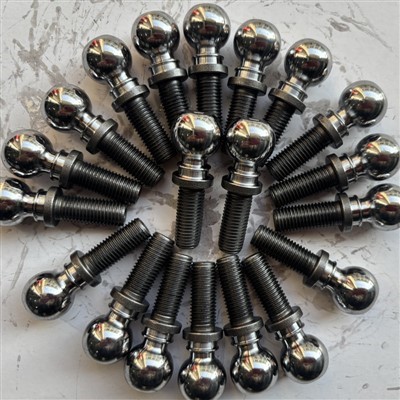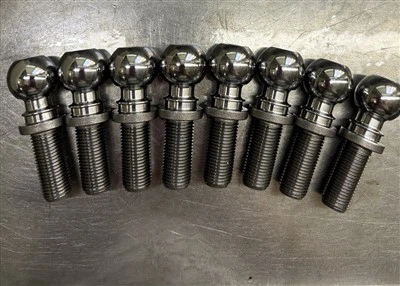
These components are suitable for the steering systems of passenger vehicles, commercial vehicles, and construction machinery, with a particular focus on adapting to the high-load operating conditions typical of off-road vehicles and heavy-duty trucks.
Automotive ball joints are manufactured using a diverse range of materials, primarily including metals, plastics, rubber, and nylon. Among these, metals-such as steel and copper-constitute the core structural elements of the ball joint, offering high strength and durability. Plastics are utilized to fabricate specific components, providing lightweight properties and cost-effectiveness. Rubber is frequently employed for parts such as dust boots, while nylon materials offer a balance of wear resistance and toughness. Each material possesses distinct characteristics and advantages, playing a vital role in the various application scenarios of automotive ball joints.
Metal materials occupy a pivotal position within the field of automotive ball joints. Steel, for instance, serves as the ideal material for manufacturing the main body of the ball joint due to its exceptional strength; it can withstand immense pressure and impact forces, ensuring that the ball joint remains robust and stable even under complex road conditions. Copper is also utilized, offering excellent electrical conductivity and corrosion resistance to support specific functional requirements within the ball joint assembly. In demanding applications such as automotive suspension systems-where requirements for strength and durability are rigorous-metal ball joints undoubtedly represent the optimal choice.
Plastic automotive ball joints possess a unique appeal. Their lightweight nature constitutes a significant advantage for vehicles prioritizing lightweight design to enhance fuel efficiency. Furthermore, the relatively low cost of plastics allows for effective control over automotive production expenses. In weight-sensitive areas subject to lower mechanical loads-such as certain auxiliary components-plastic ball joints perform admirably, fulfilling essential functional requirements while simultaneously reducing the overall vehicle weight burden.
Rubber materials are likewise indispensable in automotive ball joint assemblies. They are frequently employed in the fabrication of dust boots, boot seats, and connection interfaces-components that are often produced via integral molding. Rubber exhibits exceptional flexibility and sealing capabilities, effectively preventing the ingress of contaminants-such as dust and moisture-into the ball joint's interior, thereby extending its service life. Additionally, rubber serves a buffering and vibration-damping function at connection points, contributing to enhanced ride comfort.
Nylon materials also have their specific applications within the automotive ball joint sector. Possessing inherent wear resistance and toughness, nylon is well-suited to withstand friction and vibration in certain specific automotive components. For instance, the standard nylon ball joints utilized in various DIY aircraft models exemplify the distinct advantages this material offers within specialized technical domains. In summary, automotive ball joints-crafted from a variety of materials-play a pivotal role within the various systems and components of a vehicle, each leveraging its unique characteristics. Automotive manufacturers carefully select the most suitable materials based on specific operating scenarios and performance requirements, thereby ensuring the safe, stable, and comfortable operation of the vehicle.