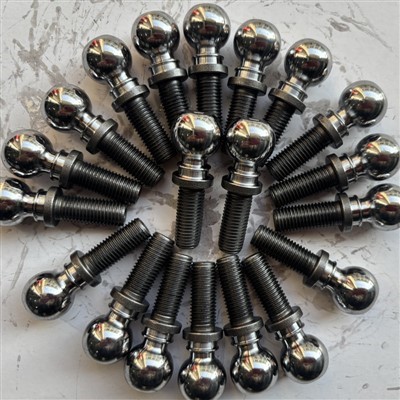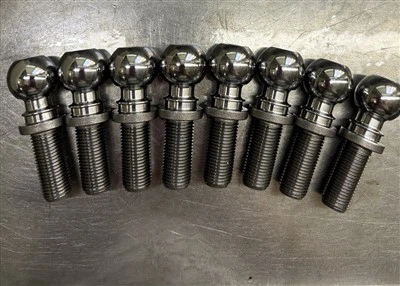
The stabilizer link ball joint is a critical connecting component within an automobile's suspension system. Its core principle lies in transmitting forces, counteracting body roll, and enhancing handling stability.
Multi-Degree-of-Freedom Rotation: The ball-and-socket structure permits slight angular oscillation in both vertical and horizontal directions, accommodating suspension movement and body roll.
Force Transmission and Damping: Transmits road impacts from the shock absorbers or lower control arms to the stabilizer bar, inducing the bar to twist in order to suppress body roll; simultaneously, the rubber bushings absorb high-frequency vibrations.
Stress Dissipation: Through a flexible compensation mechanism, it alleviates stress concentrations resulting from chassis deformation, thermal expansion and contraction, or assembly tolerances, thereby preventing abnormal noises or premature component failure.