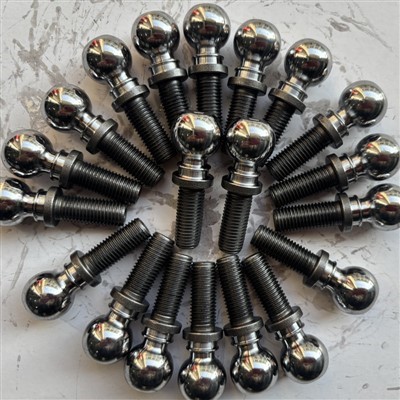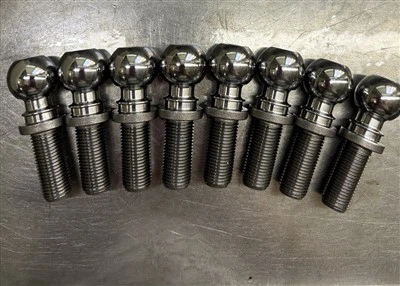
Inner and outer tie rod ends are two distinct types of ball joints found within an automobile's steering system; their primary differences lie in their definitions, connection points, and functional emphasis.
Inner Tie Rod End: Typically refers to the tie rod end attached to the steering rack; it connects directly to the steering gear (steering mechanism).
Outer Tie Rod End: Typically refers to the tie rod end (or steering link outer end) attached to the tie rod; it connects to the tie rod itself.
Inner Tie Rod Connection Point: The opposite end of the inner tie rod connects to the steering knuckle (commonly referred to as the "spindle").
Outer Tie Rod Connection Point: The opposite end of the outer tie rod also connects to the steering knuckle ("spindle") or to related suspension components.
Function and Collaborative Operation
Core Function: Both components serve as the "joints" of the steering system. Through the precise interplay of steel balls and ball sockets, they facilitate multi-directional rotation, thereby transmitting the steering force from the steering wheel to the road wheels.
Collaborative Relationship: The inner tie rod end and the outer tie rod end are not directly connected; however, they function in close coordination during operation.
The Inner Tie Rod End is positioned closer to the steering gear and acts as the critical *inner* node for the transmission of steering commands.
The Outer Tie Rod End is positioned closer to the road wheel and serves as the critical *outer* node for the transmission of force to the wheel.