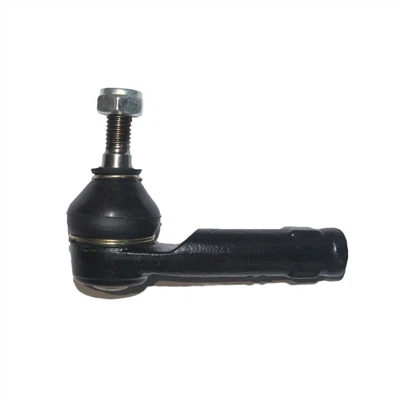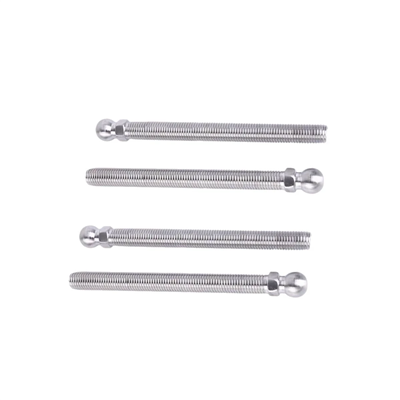

The MacPherson strut suspension is a widely used front - suspension system in modern vehicles, known for its simplicity, compactness, and cost - effectiveness. At the heart of this suspension system, the adjustable lower ball joint plays a crucial role that significantly impacts the vehicle's handling, safety, and overall performance.
Understanding the MacPherson Strut Suspension
Before delving into the role of the adjustable lower ball joint, it's essential to understand the MacPherson strut suspension itself. This suspension design combines a shock absorber and a coil spring into a single unit, the strut. The strut is attached to the vehicle's body at the top and to the steering knuckle at the bottom. The lower control arm, on the other hand, connects the steering knuckle to the vehicle's frame. This setup allows the wheels to move up and down independently while maintaining proper alignment and steering control.
The Basics of a Lower Ball Joint
A ball joint is a spherical bearing that connects the control arm to the steering knuckle. It allows for smooth movement and rotation in multiple directions, which is essential for the proper functioning of the suspension system. The lower ball joint, in particular, is subjected to significant forces, including the weight of the vehicle, acceleration, braking, and cornering forces.
The Role of an Adjustable Lower Ball Joint
1. Alignment Adjustment
One of the primary roles of an adjustable lower ball joint is to provide alignment adjustment. Wheel alignment is crucial for a vehicle's handling, tire wear, and fuel efficiency. Incorrect alignment can cause uneven tire wear, pulling to one side, and poor steering response. With an adjustable lower ball joint, mechanics can fine - tune the camber, caster, and toe angles of the wheels. Camber refers to the vertical tilt of the wheels, caster is the angle of the steering axis, and toe is the angle of the wheels relative to each other when viewed from above. By adjusting these angles, the adjustable lower ball joint helps ensure that the wheels are properly aligned, which in turn improves the vehicle's handling and extends the life of the tires.
2. Handling and Performance
The adjustable lower ball joint also plays a vital role in enhancing the vehicle's handling and performance. During cornering, the ball joint allows the wheels to pivot smoothly, providing better traction and stability. By adjusting the ball joint, the suspension geometry can be optimized for different driving conditions. For example, in high - performance driving, a more aggressive camber angle can be set to increase the contact area of the tires during cornering, improving grip and reducing understeer or oversteer.
3. Compensation for Wear and Modifications
Over time, the components of the suspension system, including the ball joints, can wear out. An adjustable lower ball joint can compensate for this wear by allowing for adjustments to be made. Additionally, when a vehicle undergoes modifications such as lowering or installing larger wheels and tires, the suspension geometry can change. The adjustable lower ball joint can be used to correct these changes and restore the proper alignment and handling characteristics of the vehicle.
Our Offerings as an Adjustable Lower Ball Joint Supplier
As a leading supplier of adjustable lower ball joints, we understand the importance of these components in the MacPherson strut suspension system. Our products are designed with precision and manufactured using high - quality materials to ensure durability and performance.
We offer a wide range of adjustable lower ball joints to fit various vehicle makes and models. Whether you are a professional mechanic working on a high - performance vehicle or a car enthusiast looking to upgrade your suspension, our products are the ideal choice.
Our Bottom Arm Ball Joint is engineered to provide smooth and reliable movement, with adjustable features that allow for precise alignment adjustments. It is built to withstand the rigors of daily driving as well as high - performance applications.
The Bottom Ball Joint Car in our product line is specifically designed for cars, offering excellent compatibility and performance. It helps maintain proper wheel alignment, which is essential for the car's handling and tire longevity.
For those who need a ball joint for the off - side suspension arm, our Offside Suspension Arm Ball Joint is the perfect solution. It is adjustable, allowing for fine - tuning of the suspension geometry to meet the specific requirements of your vehicle.


Quality Assurance
We take quality seriously. Our adjustable lower ball joints undergo rigorous testing to ensure they meet or exceed industry standards. We use advanced manufacturing techniques and high - grade materials to guarantee the durability and reliability of our products. Each ball joint is inspected for proper fit, function, and adjustability before it leaves our facility.
Why Choose Our Adjustable Lower Ball Joints
- Precision Engineering: Our ball joints are designed with precision to provide accurate alignment adjustments and smooth movement.
- High - Quality Materials: We use high - strength materials that can withstand the forces and stresses of the suspension system.
- Wide Compatibility: Our products are available for a wide range of vehicle makes and models, ensuring that you can find the right ball joint for your vehicle.
- Expert Support: Our team of experts is available to provide technical support and advice on installation and adjustment.
Contact Us for Procurement
If you are interested in purchasing our adjustable lower ball joints, we encourage you to contact us for a detailed discussion. Our sales team is ready to assist you with any questions you may have regarding our products, pricing, and delivery options. Whether you are a small repair shop or a large automotive manufacturer, we can provide you with the high - quality adjustable lower ball joints you need to keep your vehicles running smoothly.
References
- Milliken, W. F., & Milliken, D. L. (1995). Race Car Vehicle Dynamics. Society of Automotive Engineers.
- Gillespie, T. D. (1992). Fundamentals of Vehicle Dynamics. Society of Automotive Engineers.
- Bosch Automotive Handbook (7th Edition). Robert Bosch GmbH.