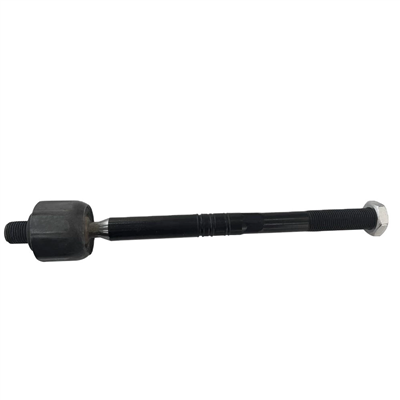

Can a tie rod end cause premature tire wear? This is a question that often comes up among car owners and automotive enthusiasts. As a tie rod end supplier, I've seen firsthand the impact that a faulty tie rod end can have on tire wear. In this blog post, I'll explore the relationship between tie rod ends and premature tire wear, and explain how you can identify and address the issue.
Understanding Tie Rod Ends
Before we dive into the connection between tie rod ends and tire wear, let's first understand what tie rod ends are and what they do. Tie rod ends are an essential part of a vehicle's steering system. They connect the steering gear to the steering knuckle, allowing the wheels to turn when the driver turns the steering wheel. There are two types of tie rod ends: inner and outer. The inner tie rod end is connected to the steering gear, while the outer tie rod end is connected to the steering knuckle.
The tie rod ends are designed to be flexible, allowing for smooth movement of the steering system. However, over time, they can wear out due to normal use, road conditions, and other factors. When a tie rod end wears out, it can cause a variety of problems, including premature tire wear.
How Tie Rod Ends Affect Tire Wear
When a tie rod end is worn or damaged, it can cause the wheels to be misaligned. Wheel alignment refers to the angle at which the wheels are positioned relative to the vehicle's body. Proper wheel alignment is crucial for even tire wear and optimal vehicle performance. When the wheels are misaligned, the tires can wear unevenly, leading to premature tire wear.
There are several ways in which a worn tie rod end can cause wheel misalignment. For example, if the outer tie rod end is worn, it can cause the wheel to toe out or toe in. Toe out means that the front of the wheel is pointing outward, while toe in means that the front of the wheel is pointing inward. Both toe out and toe in can cause the tires to wear unevenly, with the outer or inner edges of the tires wearing more quickly than the center.
In addition to toe misalignment, a worn tie rod end can also cause camber and caster misalignment. Camber refers to the vertical angle of the wheel, while caster refers to the angle of the steering axis. When the camber or caster is misaligned, it can cause the tires to wear unevenly on the inner or outer edges.
Signs of Premature Tire Wear Caused by Tie Rod Ends
There are several signs that you may be experiencing premature tire wear caused by a worn tie rod end. These include:


- Uneven tire wear: If you notice that the tires are wearing unevenly, with the outer or inner edges wearing more quickly than the center, it could be a sign of a worn tie rod end.
- Steering problems: A worn tie rod end can cause the steering to feel loose or unresponsive. You may also notice that the vehicle pulls to one side when you're driving.
- Vibrations: If you feel vibrations in the steering wheel or the vehicle when you're driving, it could be a sign of a worn tie rod end.
- Noise: A worn tie rod end can cause a clicking or popping noise when you turn the steering wheel.
If you notice any of these signs, it's important to have your vehicle inspected by a qualified mechanic as soon as possible. Ignoring the problem can lead to further damage to the steering system and the tires, and can also affect the safety of your vehicle.
Preventing Premature Tire Wear Caused by Tie Rod Ends
The best way to prevent premature tire wear caused by tie rod ends is to have your vehicle's steering system inspected regularly. A qualified mechanic can check the condition of the tie rod ends and other steering components, and can recommend any necessary repairs or replacements.
In addition to regular inspections, there are several things you can do to extend the life of your tie rod ends and prevent premature tire wear. These include:
- Avoid rough roads: Driving on rough roads can put extra stress on the tie rod ends and other steering components, causing them to wear out more quickly. Whenever possible, avoid driving on rough roads or potholes.
- Maintain proper tire pressure: Keeping your tires properly inflated can help to reduce the stress on the tie rod ends and other steering components. Make sure to check your tire pressure regularly and keep it at the recommended level.
- Rotate your tires: Rotating your tires regularly can help to ensure even tire wear and extend the life of your tires. Make sure to follow the manufacturer's recommendations for tire rotation.
- Replace worn tie rod ends promptly: If you notice any signs of a worn tie rod end, such as uneven tire wear or steering problems, it's important to have it replaced promptly. Ignoring the problem can lead to further damage to the steering system and the tires.
Our Tie Rod End Products
As a tie rod end supplier, we offer a wide range of high-quality tie rod ends for various makes and models of vehicles. Our tie rod ends are made from premium materials and are designed to meet or exceed the original equipment manufacturer (OEM) specifications. We also offer a variety of other steering components, such as Inner Tie Rod Joint, Bottom Ball Joint Car, and Bottom Arm Ball Joint.
Our products are rigorously tested to ensure their quality and performance. We understand the importance of providing reliable and durable steering components, and we're committed to meeting the needs of our customers. Whether you're a professional mechanic or a DIY enthusiast, we have the products you need to keep your vehicle's steering system in top condition.
Contact Us for Purchase and Consultation
If you're in the market for high-quality tie rod ends or other steering components, we'd love to hear from you. Our team of experts is available to answer any questions you may have and to help you find the right products for your vehicle. We offer competitive pricing, fast shipping, and excellent customer service.
Don't let a worn tie rod end cause premature tire wear and other steering problems. Contact us today to learn more about our products and to place your order. We look forward to working with you!
References
- Automotive Service Excellence (ASE). (n.d.). Tie Rod Ends. Retrieved from [ASE website]
- Car Talk. (n.d.). How Tie Rods Work. Retrieved from [Car Talk website]
- Firestone Complete Auto Care. (n.d.). Signs Your Tie Rods Need to Be Replaced. Retrieved from [Firestone website]
- Goodyear. (n.d.). Tire Wear and Tear. Retrieved from [Goodyear website]
- National Highway Traffic Safety Administration (NHTSA). (n.d.). Tire Safety. Retrieved from [NHTSA website]